
Why is it that two customers enter the same online store and behave differently?
Within minutes, one buys, another is spending days comparing products on different websites. Someone else adds to their cart, gets to the checkout page and then ghosts you without placing the order.
If you have ever asked yourself why, the answer is simple: not every online shopper thinks, decides or buys the same way.
One mistake that many online store owners make is treating all visitors the same. They all make the same offers, write the same product descriptions, and expect every customer to respond the same way. Unfortunately that rarely works.
Knowing the different shopping behaviors will help you create a better experience for your customers, improve conversions and build better relationships with your audience. Rather than attempt to persuade everyone with the same approach, you can customize your store to address varying customer needs.
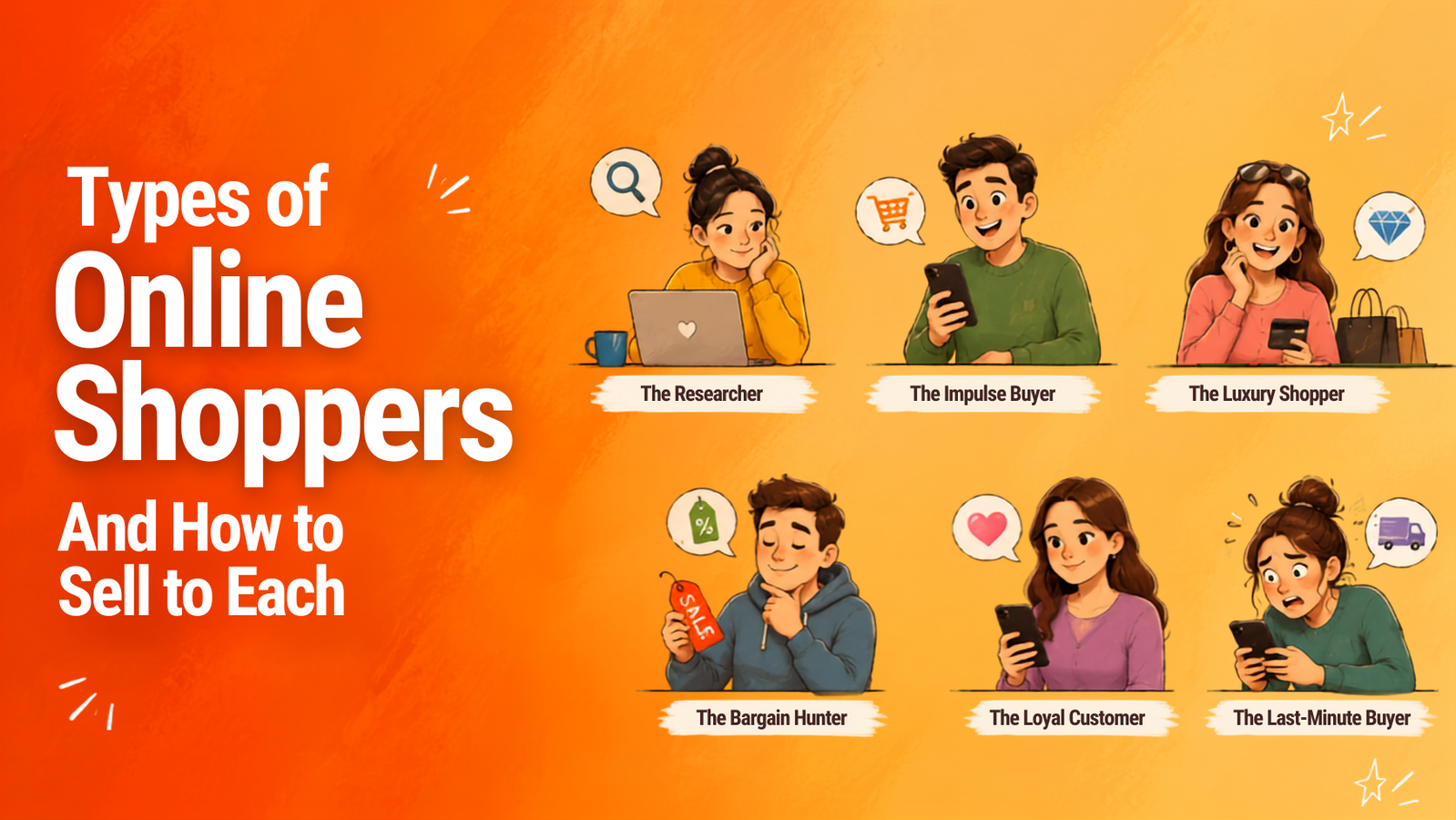
In this article, we look at the seven most common types of online shopper, what motivates each one and practical ways to get them to buy.
Table of Content :
- Why Does Shopper Types Matter?
- The Impulse Buyer
- The Researcher.
- The Deal Seeker
- The Faithful Customer
- The Luxury Buyer
- The Window Shopper.
- The Last-Minute Shopper Can A Customer Be More Than One Shopper Type?
- How to Know Your Customer Types
- FAQ
- Conclusion
Why Knowing Your Shopper Types Matters
Consider going to a clothing store. They will grab the first jacket they like and head straight to the billing counter. Another spends twenty minutes checking the quality of fabric, reading labels and comparing prices.
The same is true for online shopping.
Every visitor is different, every visitor has different expectations, different concerns, different buying habits. Some people want the cheapest price, others are willing to pay for quality or convenience.
This knowledge of differences allows you to create a shopping experience that is more personal in nature than a one size fits all approach.
For example, a bargain hunter is likely to respond to bundle offers or limited time discounts. But a researcher wants detailed product information, customer reviews and answers to common questions before they feel confident enough to buy.
When you build your online store using a platform like JoonWeb , it’s easier to organize products, highlight promotions, add customer reviews and create pages that speak to different kinds of shoppers. Little things like this can make a big difference in how visitors interact with your store.
We’re not trying to change the way people shop. We’re trying to understand how they think and remove the barriers that prevent them from completing a purchase.
1. The Impulse Buyer
Who are they?
Impulse buyers don’t spend a lot of time thinking about a purchase. If something catches their eye and they see value in it, they are ready to buy almost immediately.
They are often motivated by emotion, attractive product displays, products that are trending or limited time offers.
Why It’s Important
Impulse buyers are responsible for quick sales, especially during promotions or festive seasons. But if your website doesn’t create excitement or the checkout process appears complicated, they’re going to lose interest just as fast.
Real World Example :
Imagine someone scrolling through Instagram and seeing a cool water bottle that says:
"Only 20 left at this price. 15% off today only.
The customer clicks on the link, likes the design and makes the purchase within minutes without comparing with other brands.
That’s the impulse buyer in action.
How To Sell Them :
- Use good, crisp product pictures.
- Be transparent about time-limited offers.
- Display labels like “Best Seller” or “Trending Now.”
- Simplify and speed up checkout.
- Where possible, allow one-click payment options.
Impulse buyers make snap decisions. It is your job to generate excitement and make buying as easy as possible.
2. The Researcher

Who Are They?
Researchers believe in making informed choices.
They look at prices, they read customer reviews, they watch videos, they look at the competition and sometimes they even seek out the opinions of experts before they buy anything.
They don’t mind taking extra time if it means they won’t make the wrong purchase.
The Importance
Researchers may not buy immediately, but once they trust a brand they tend to become loyal customers.
If your website is helpful, they are much more likely to come back when they are ready to purchase.
Real Life Example :
A person looking to buy a laptop might go to 5 different websites, watch comparison videos on Youtube, read customer reviews and compare technical specifications before coming to a final decision.
This is a behavior that many shoppers follow even for everyday products such as skincare or kitchen appliances.
How to Sell to Them :
- Write detailed product descriptions.
- Add specifications and dimensions.
- Add FAQs for common questions
- Display real customer reviews.
- Use comparison charts where necessary.
If you run an online store on JoonWeb, you can help researchers get quick answers without having to leave your website by creating easy to read sections of product information.
Researchers don’t need to be convinced, they need information. The more transparent and helpful you are, the more confident buyers will feel about buying from you.
3. The Deal Seeker
Who are they?
They are bargain hunters, derive almost as much pleasure from the hunt as from the purchase.
These buyers are looking for discounts, coupon codes, cashback offers, bundle deals and seasonal sales before they make a purchase.
Ultimately, price often matters more than the brand itself.
Why it’s important :
Promotional campaigns can boost your sales considerably by attracting bargain hunters. But if you don’t plan carefully, leaning too heavily on discounts can eat into your profit margins.
The point is to provide value, not to keep cutting prices.
An Actual Example :
A customer browses shoes, adds a pair to his cart, but does not purchase. The next day they get an email offering 10% off for the next 24 hours.
That little incentive is enough to get them to complete the order.”
How to sell them :
- Run limited time discounts for special occasions.
- Package deals instead of discounting individual products
- Add loyalty points or cashback rewards.
- Note the free shipping thresholds.
- Display customer savings.
Bargain hunters like to save money, but they also like to get more for their money. Smart promotions are better than constant price cuts.
4. The Faithful Customer

Who are they ?
Every business wants to retain its loyal customers.
They have bought from you in the past, trust your brand, and usually come back when they need similar products. Many also recommend your business to family and friends.
Loyal customers are priceless because it costs more to acquire a new customer than to retain an existing one.
Significance of it :
Returning customers tend to spend more money over time, leave positive reviews and become advocates of the brand. Most of the time, you’re going to find that it’s better in the long run to invest in retaining customers than just marketing to new visitors.
Real Life Example :
Think of a person who buys coffee beans from the same online store every month because they know the quality and the service Even when another store has a slightly lower price, they continue to buy from the brand they know.
That’s loyalty.
How to Sell to Them :
- Use loyalty programs to drive repeat purchases.
- Priority access to new products.
- Provide personalized recommendations.
- Thank your customers for every purchase.
- Provide after sale excellent customer support.
Loyal customers aren't built on discounts alone. They’re earned through consistent quality, dependable service and good shopping experiences that build repeat business.
5. The Luxury Buyer
What are they ?
Luxury customers are looking for the ultimate experience, not the best value. They are looking for high quality, exclusivity, craftsmanship and a dependable brand.
If the quality and experience of the product matches those buyers’ expectations, a higher price could be a value.
Why Is It Important
While they may be a tiny percentage of your audience, premium consumers tend to have a far higher average order. If you can win their confidence, they will likely do business with you again and suggest you to others.
Real Life Example :
Imagine you are looking to buy a handmade leather wallet. They don't always go for the lowest option. They look at product images, they read about the materials, they want to know the story behind the brand. They are buying quality and confidence, not just a wallet.
How to sell them :
- High quality photography of products.
- Tell a story about your brand or product.
- Attention to fine materials and craftsmanship.
- Provide excellent customer service.
- Keep product pages clean, professional and uncluttered.
Luxury shoppers do not just purchase goods; they purchase experiences. A nice online shop, good communication, all help to reinforce that premium experience.
6. The Window Shopper

Who are they?
Window shoppers are there to window shop, not to buy.
They might be looking at new brands, or saving ideas for later, or just passing time. That doesn’t mean if they don’t buy today they’ll never be a customer.
Why it is important:
Many businesses overlook the window shopper, as he does not immediately purchase. In fact, these visitors are often future customers if they had a good experience and remember your brand.
Real life example :
Customer designs new home while shopping for furniture online. They browse some sofas, select a couple of favorites and walk out empty handed. They get their wages. Then they come back in a few weeks’ time and place an order.”
How to sell them :
- Let customers make a wishlist of products.
- Get them to sign up for emails about future deals.
- Useful share buying guides and blogs.
- Recycle abandoned browsing/remarketing campaigns as appropriate.
- Ensure your branding is consistent so customers remember you.
Not all visitors are ready to buy now. Sometimes you just want to surprise them and have them want to come back later.
7. The Last Minute Buyer
Who Are They?
Time is often a factor for last-minute shoppers. They might be looking for a birthday gift, a dress for a festival, supplies for an office, or a replacement product as soon as possible.
Convenience is more important than endless choice.
Why it is important
These shoppers are ready to buy, but only if they believe your store can solve their problem quickly.
If users are unable to see important information like delivery times or if something is out of stock, they will likely go to another website.
Real Life Example :
Two days before Mother’s Day and someone remembers they haven’t bought a gift. They look it up on the Internet, find the store with fast delivery, buy it and get on with their life.
How to Sell Them :
- Display delivery estimates.
- Display stock quantity in real-time.
- Ship express when able.
- Make the checkout process fast and easy.
- Featured products with immediate delivery.
Last minute buyers want speed and certainty. The easier you make it for them to buy, the more likely they will be to choose your store.
A customer can be of more than one shopper type?
Of course.
Shopping behaviour is not constant but situation specific.
For example when someone is buying a mobile phone they might spend days looking into the specifications and reviews before they decide. It’s cheap and it doesn’t require much thought, so you can buy a phone case minutes later.
Likewise, a loyal customer can turn into a bargain hunter during festive sales and a researcher can become a last-minute buyer when they suddenly need something.
Think of these shopper types as behaviors that happen in different situations, instead of one category of customers forever. By understanding these behaviors, you can create a more flexible, customer-friendly shopping experience.
How to Identify Your Customer Type
You don’t have to guess what your customers do. Most online stores already collect useful information that can help you understand shopping patterns.
Here are some simple ways to get to know your audience better :
To find out which products are the most popular and where you're losing customers, look at the statistics on your website.Keep track of previous purchases to identify recurring clients and purchasing trends.
Before making a purchase, read customer reviews and support inquiries to find out what issues are common.Monitor abandoned carts to determine where customers are becoming disinterested.
Session recordings and heatmaps show how users engage with your pages.
If you built your online store with JoonWeb, checking your store’s performance and how your customers behave on a regular basis can help you make informed decisions. Small changes based on data whether it’s improving product pages, showcasing the most popular products or adjusting promotional offers often result in better results over the long term.
Conclusion
Every customer shops differently and that’s what makes e-commerce so interesting.
Some visitors are impulse buyers, others are more thoughtful, compare and deliberate over every option before they make their decision. Some are just shopping for the best deal. Some will pay more for quality, convenience or a name they trust.
The more you understand these various shopping habits, the simpler it is to design an online store that appeals to every consumer. Your conversion rates can be greatly increased by small changes like better product information, thoughtful marketing, quicker checkout times, or personalized experiences.
Don’t sell the same way to everyone out there. Tailor your approach to each type of shopper. When your store meets those expectations, you are not just growing sales but building better customer relationships that extend beyond that one purchase.
First understand your customers. Then the next step is to build an online store that matches their expectations.
JoonWeb lets you build a professional looking online store without writing any code, customize your storefront, display your products in a professional way and create a shopping experience that will appeal to all types of customers, from first-time visitors to repeat buyers.
The better you treat your customers in your store, the more likely they will return.